Armature - Philosophical Concept | Alexandria
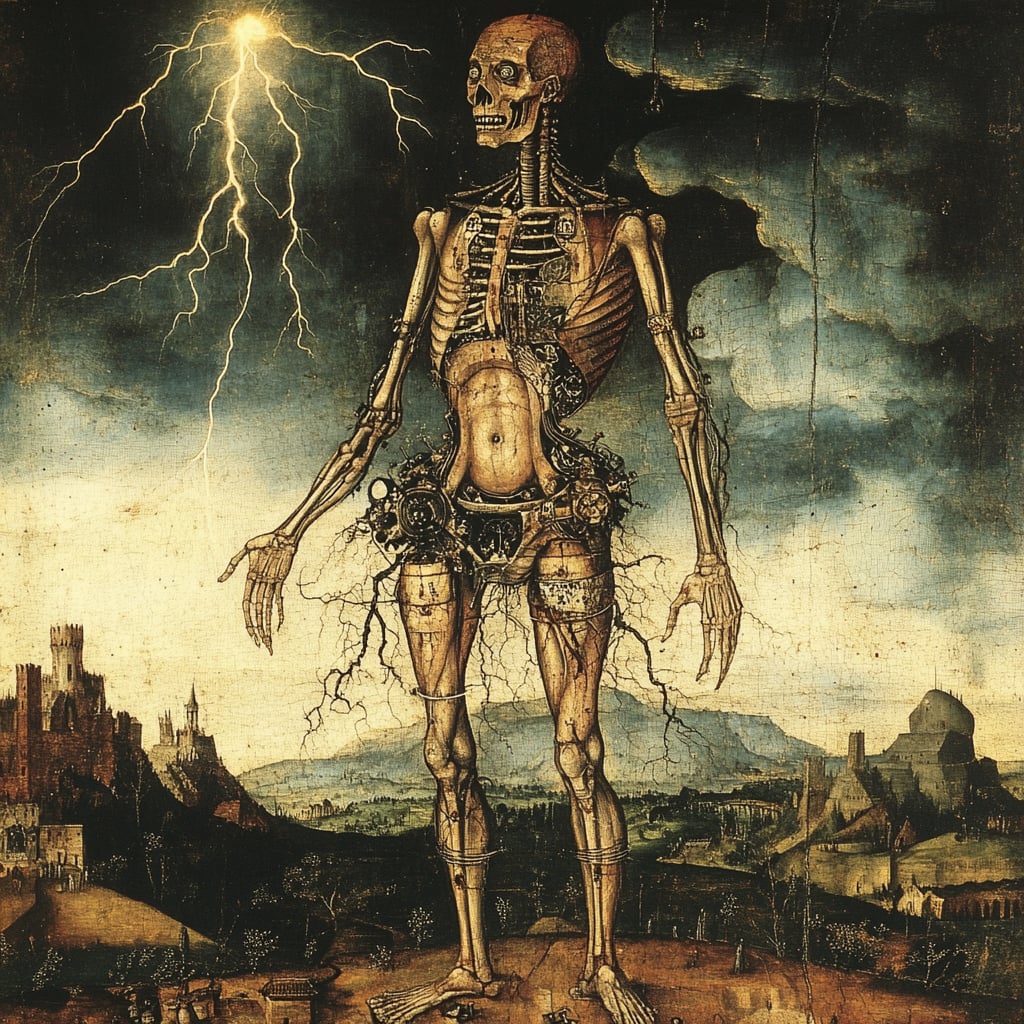
Armature, the unseen skeleton within a sculpture, is more than mere support; it is the hidden architecture that allows artistic visions to ascend into three-dimensional reality. Often mistaken for a simple framework, it underlies the very possibility of permanence in soft media, a silent partner to the sculptor’s hand.
While the precise origin of armature is debated, evidence suggests early forms were used by ancient civilizations. References in Pliny the Elder's Natural History (c. 77-79 AD) hint at the use of internal structures in creating colossal bronze statues, although specific construction details remain elusive. The era, ripe with imperial ambition and grand artistic endeavors, invites contemplation: Were these armatures merely practical necessities, or did they bear some symbolic significance, mirroring the power structures of the Roman Empire itself?
Over centuries, the armature evolved from rudimentary stakes and supports to complex, engineered frameworks. The Renaissance saw the flourishing of elaborate armatures, enabling masters like Michelangelo to defy gravity and create iconic works now revered worldwide. The 19th century brought advancements in metalworking, allowing for lighter, more flexible, and intricate structures. Interestingly, the rise of armatures coincided with a growing fascination with anatomy and the human form, prompting questions about the parallel between the sculptor's process and the creation of life. Could the act of building an armature be seen as a gesture of imitatio dei, a divine act of creation?
Today, armatures continue to be crucial in both traditional and digital sculpting. They represent not only structural support but also an embodiment of artistic intention, a deliberate choice that shapes the final form. As contemporary artists experiment with new materials and techniques, the armature's role persists, challenging the boundaries between sculpture and engineering, between the seen and unseen. What new forms will emerge as technology advances the possibilities of internal structures, and how they will continue to reflect our shifting understanding of art and form?