Counterfactual History - Philosophical Concept | Alexandria
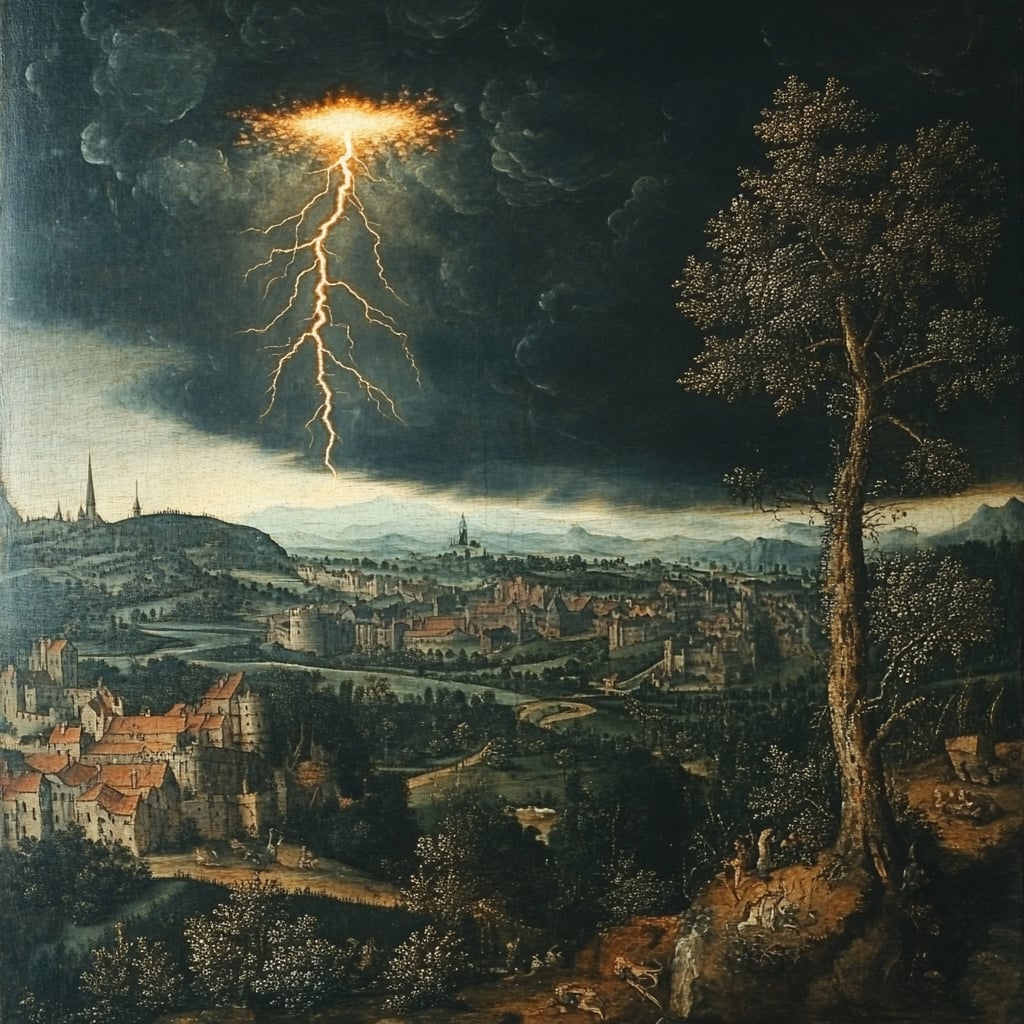
Counterfactual History, also known as virtual history or "what if" history, is a field of inquiry that explores historical outcomes predicated on specific alterations of past events. It's a realm where established narratives confront alternative realities, inviting a reevaluation of causality, contingency, and historical agency. Often misconstrued as mere speculative fiction, Counterfactual History, in its scholarly form, aims to rigorously examine the complex interplay of factors that shaped our world.
Though the formalization of counterfactual history as a distinct methodology is relatively recent, its roots extend far back. In Livy’s Ab Urbe Condita, written in the first century AD, the Roman historian muses on what would have happened had Alexander the Great turned his ambitions westward, offering an early, albeit implicit, example of counterfactual reasoning. This occurred during an era of Roman expansion and consolidation, amidst anxieties about powerful foreign adversaries, suggesting an underlying desire to understand the fragility and possible alternatives to their own ascendance.
Over centuries, reflections on roads not taken appeared sporadically in historical and philosophical texts. However, the 20th century witnessed a surge of interest fueled by events like World War II, the Cold War, and the rise of complex systems theory. Figures like Pieter Geyl, with his critiques of deterministic historical narratives, and later, Niall Ferguson, who popularized structured counterfactual analysis, significantly shaped the field. This scholarly interest was further amplified by the popularity of alternative history fiction, blurring the lines between imaginative speculation and rigorous historical inquiry. Did the butterfly effect truly play a role in key historical turning points? How deeply do our assumptions dictate the shape of the past we perceive?
Today, Counterfactual History continues to evolve, finding resonance in contemporary debates about climate change, political polarization, and global pandemics. It persists not merely as an academic exercise, but as a tool for understanding the profound interconnectedness of past, present, and future, prompting us to consider: To what extent is the world we know the only one that could have been?