Earthenware - Philosophical Concept | Alexandria
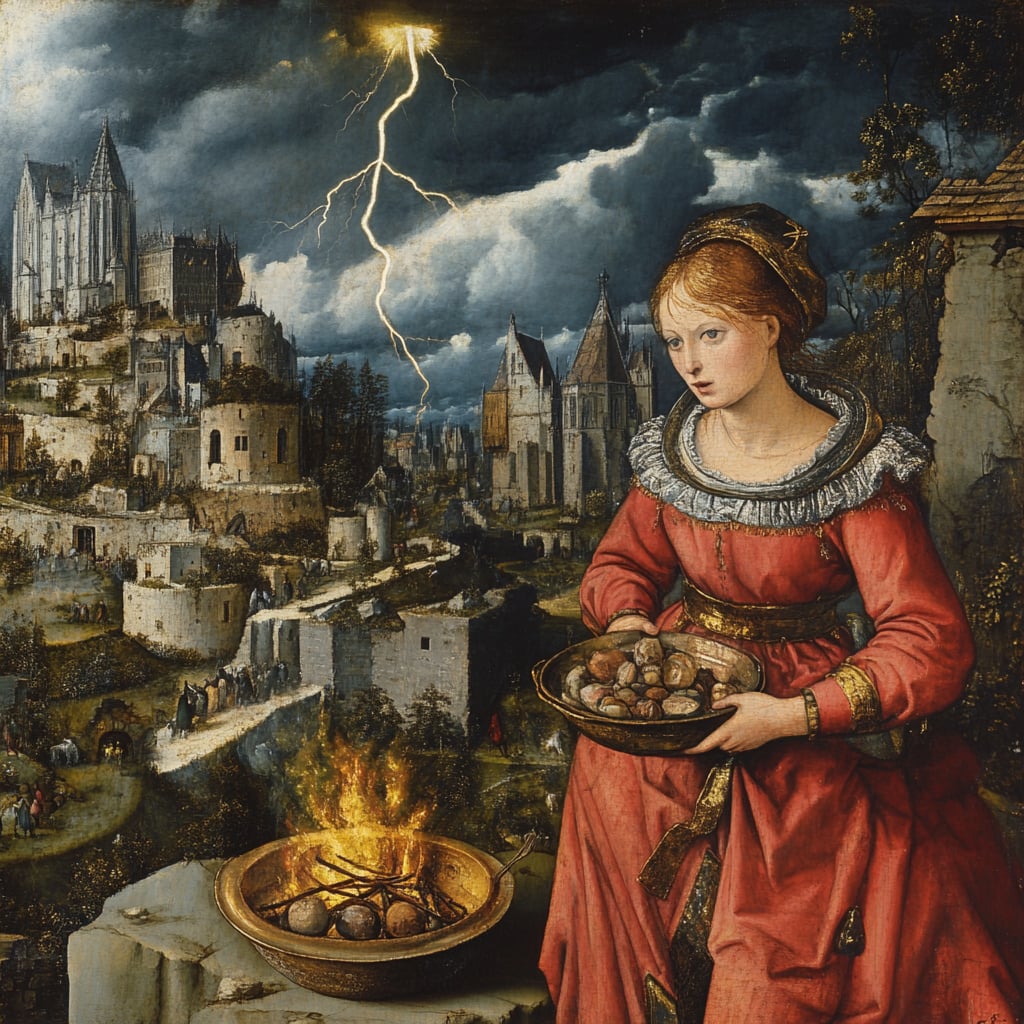
Earthenware, a humble term for vessels born of earth and fire, represents one of humanity's earliest dialogues with the material world. Often mistaken for a primitive ancestor of more refined ceramics, earthenware possesses an inherent complexity and enduring legacy that transcends mere functionality. Its story begins millennia ago, entwined with the very roots of civilization.
The earliest known examples of earthenware pottery date back to around 20,000 BCE in China, a period shrouded in the mysteries of early human settlements and migration. These rudimentary yet remarkable artifacts offer tantalizing glimpses into prehistoric societies, communities flourishing amidst environmental shifts and social transformations, prompting countless questions about their daily lives. As agriculture spread, so too did earthenware, evidenced by discoveries in sites across the globe. Fragments recovered from ancient Jericho, dating to the Neolithic period, reveal sophisticated techniques emerging in tandem with the development of settled societies.
Over centuries, earthenware evolved from basic utilitarian objects into complex artistic expressions. From the vibrant hues of ancient Egyptian vessels to the delicate forms of medieval European pottery, its development mirrors the cultural shifts and technological advancements of each era. Interpretations of earthenware artifacts have varied widely. Some view the markings and shapes as evidence of ritual practices or social hierarchies. Others see the beauty of simple creation as a reflection of humanity's innate creativity, while the question of its cultural appropriation remains a topic of heated debate. Did the spread of pottery-making represent a natural human progression, the diffusion of ideas, or something more?
Today, earthenware continues to captivate and inspire. Functional, affordable, and beautiful, earthenware remains a staple in kitchens and artistic practices worldwide. Contemporary artists and artisans are constantly reinterpreting traditional techniques, using earthenware to explore modern themes of sustainability, identity, and connection to the natural world. Its enduring presence begs the question: as we continue to innovate with advanced materials, what lessons do these ancient vessels hold for our future?