Gambler's Fallacy - Philosophical Concept | Alexandria
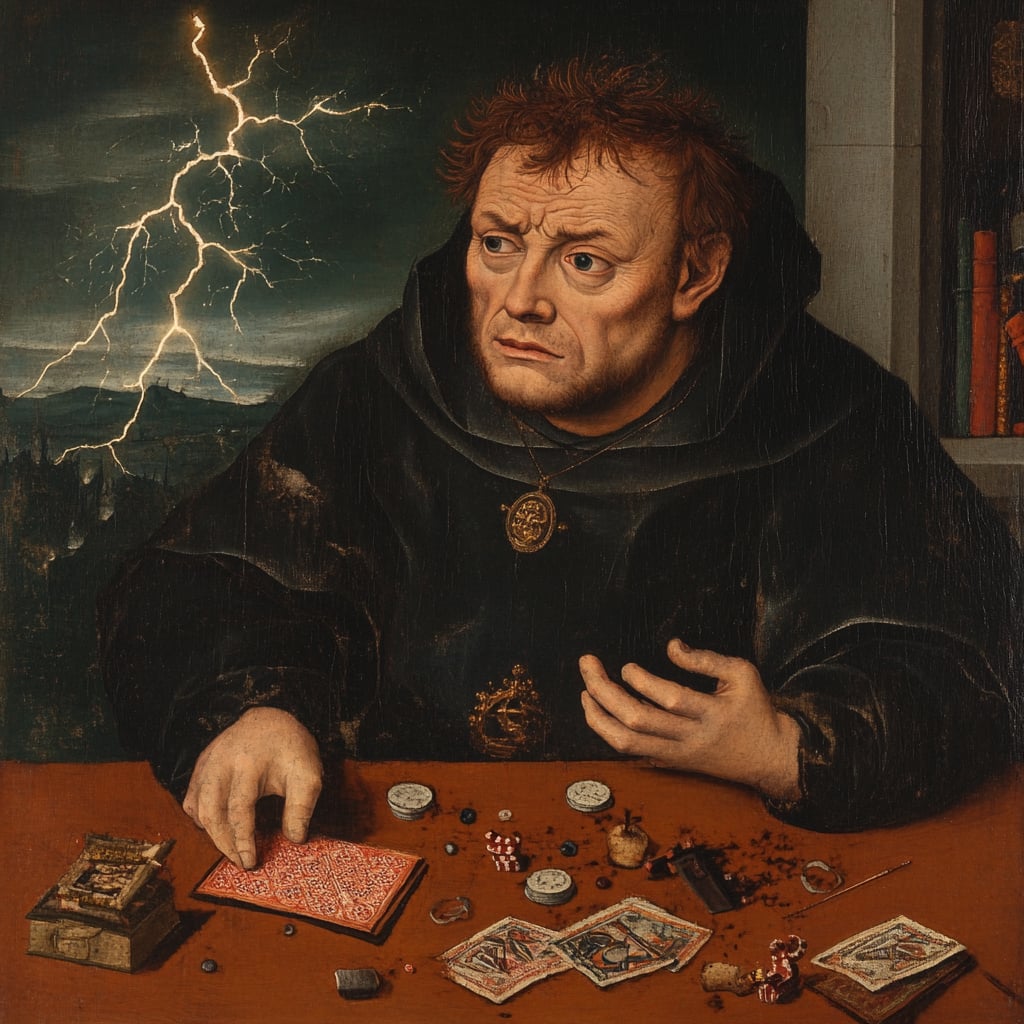
Gamblers Fallacy, a deceptive mistress of probability, is the mistaken belief that if something happens more frequently than normal during a given period, it will happen less frequently in the future, and vice versa. Also known as the Monte Carlo Fallacy or the Fallacy of the Maturity of Chances, it’s a cognitive distortion that silently whispers false assurances of impending luck or misfortune, urging us to question whether chance truly operates without memory.
Though the fallacy’s roots likely extend into the murky depths of early human attempts to understand and predict the whims of fate, a documented manifestation emerged during a famous occurrence at the Monte Carlo Casino in 1913. On August 18th, the casino witnessed an astonishing event as the roulette wheel landed on black 26 times in a row. Gamblers, succumbing to the alluring logic of the fallacy, wagered increasingly large sums on red, believing it was “due.” This episode, a singular spectacle of mathematical misunderstanding, transpired against the backdrop of pre-war Europe, a world teeming with both scientific advancement and superstitious belief, setting the stage for continued psychological inquiry.
The allure of believing in patterns where none exist has persisted, influencing not only gambling behavior but also decision-making in diverse fields. From investment strategies based on perceived market trends to medical diagnoses influenced by previous case outcomes, the gambler's fallacy continues to shape our world. The work of psychologists Daniel Kahneman and Amos Tversky, particularly their exploration of cognitive biases and heuristics, has been instrumental in understanding the underlying mechanisms of this pervasive fallacy. The mystery deepens when we consider how easily the human mind can be swayed by narratives of cause and effect, even when randomness reigns.
The legacy of the gambler’s fallacy endures as a cautionary tale, a stark reminder of the pitfalls of intuitive reasoning when confronted with the impartial laws of probability. Its presence lurks in subtle forms – the sports fan convinced their team is “due” for a win after a losing streak, the investor who sees a repeating pattern in the stock market. Are we, perhaps, all gamblers at heart, forever searching for meaning in the chaotic dance of chance?