Hades - Philosophical Concept | Alexandria
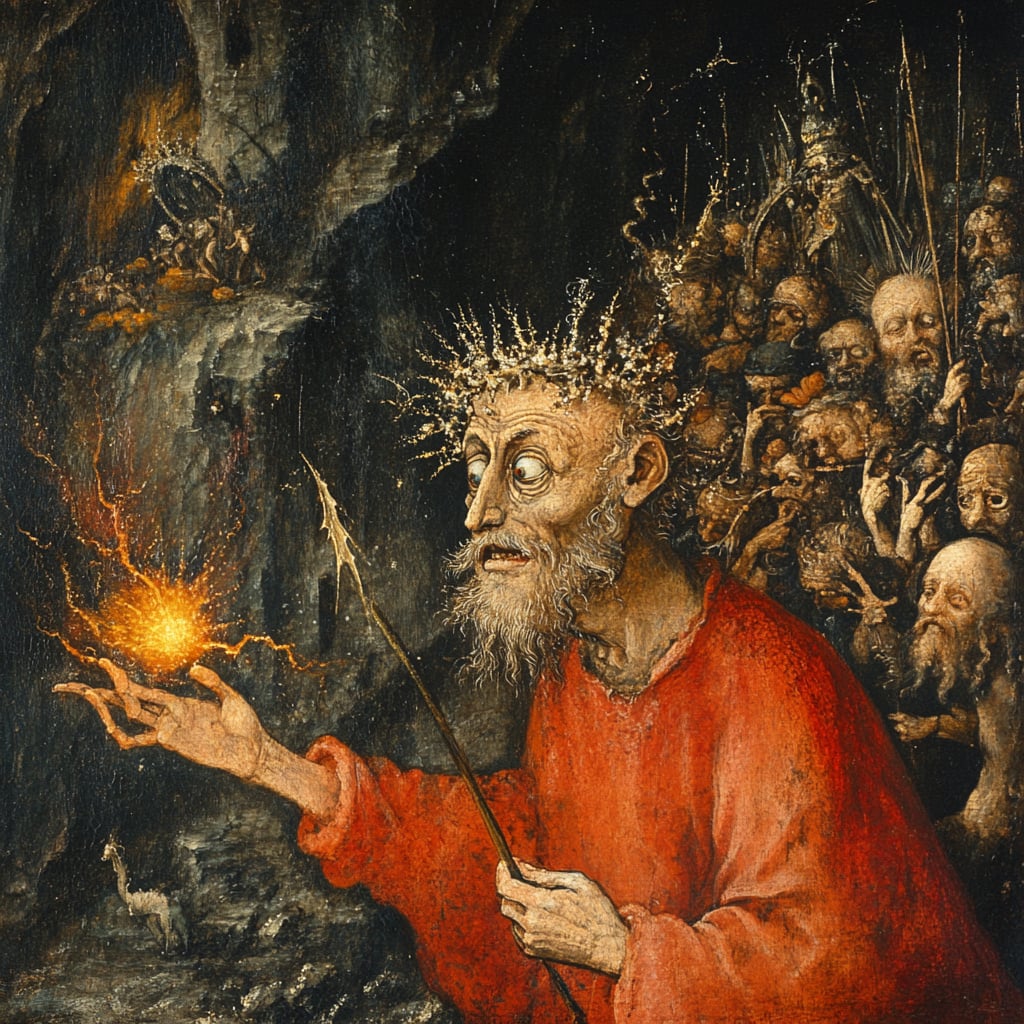
Hades: More than a name, a realm of profound mystery, often misunderstood as a singular entity of darkness, when in truth, it represents the unseen world, an integral part of the cycle of existence. Often conflated with the Devil of Abrahamic religions, Hades, or Pluto as he was known in Roman mythology, presides over the domain of the dead. Is it truly a place of eternal torment or simply a transformation? The earliest documented references to Hades appear in Homer's Iliad and Odyssey, dating back to the 8th century BCE. The concept of an underworld, a shadowy reflection of the living world, was already deeply entrenched in the Greek psyche. Hesiod's Theogony, around the same period, offers a more detailed genealogy of Hades, depicting him as the eldest son of Cronus and Rhea, swallowed at birth and later regurgitated by Zeus, subsequently claiming the Underworld as his domain. A time when reason and imagination were intertwined in what some philosophers, such as Plato, sought to capture in their dialogues, influencing everything from governance to the understanding of the soul. Over centuries, the perception of Hades has undergone considerable evolution. Initially, the Underworld was not necessarily a place of punishment but simply the destination for all souls, regardless of their actions in life. With the rise of Orphic and Eleusinian mystery cults, ideas of judgment, reward, and punishment began to emerge, shaping the popular imagination of Hades. Virgil's Aeneid provides a vivid and nuanced depiction of the Underworld, filled with distinct regions for heroes, sinners, and the uncommitted. The abduction of Persephone, perhaps the best-known myth associated with Hades, adds a layer of complexity, transforming him from a grim jailer into a husband bound by love and compromise. This narrative hints at intriguing questions about power dynamics, fertility, and the interconnectedness of the mortal and immortal realms. Are we underestimating the complexities of Hades's role, seeing him only as a dark figure? The legacy of Hades extends far beyond classical mythology. The concept of an underworld, judgment after death, and the struggle between light and darkness continue to resonate in literature, art, and philosophy, shaping everything from Dante's Inferno to modern thought experiments about morality. Contemporary reinterpretations often explore psychological themes, using Hades as a metaphor for the subconscious, repressed emotions, or the inevitable confrontation with mortality. Today, amidst discussions about existentialism and the search for meaning, Hades remains a potent symbol, an invitation to contemplate the mysteries that lie beyond the veil, challenging us to confront our own mortality and the choices that define our lives. What aspects of the human condition does the enduring myth of Hades reflect, and how can exploring these themes offer insights into the complexities of existence?