Lungs - Philosophical Concept | Alexandria
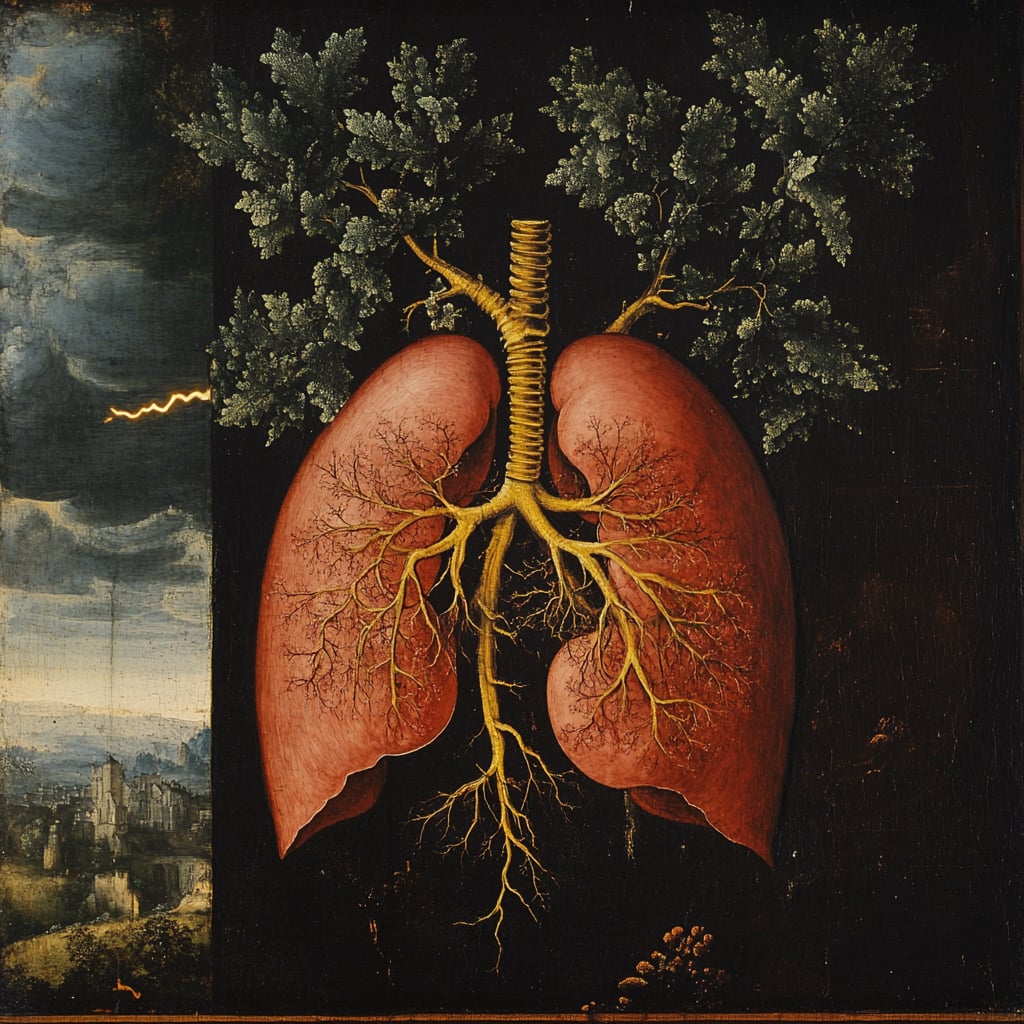
Lungs: These vital organs, often perceived as mere balloons inflating and deflating with each breath, are in reality complex and intricate structures embodying the very essence of life and mortality. What secrets do these silent partners in our existence hold, and how have our perceptions of them shaped both scientific understanding and philosophical reflection?
The earliest documented references to what we now call lungs can be traced back to ancient Egypt, around 1550 BCE, within the Ebers Papyrus, a medical text detailing various ailments and treatments. This period, marked by the reign of pharaohs and the construction of monumental pyramids, saw early attempts to understand human anatomy. However, the understanding of the lungs as mere passive recipients of air persisted for centuries. Figures like Aristotle (384-322 BCE) contributed to early anatomical studies but, due to the limitations of dissection practices and theoretical frameworks, lacked the nuanced understanding we possess today. The ideas circulating in this era were foundational yet fundamentally different from modern pulmonary science.
Interpretations of the lungs evolved slowly, driven by occasional insights and paradigm shifts. The Renaissance, with figures like Leonardo da Vinci (1452-1519) performing dissections, marked a pivotal moment. His anatomical drawings, though not widely disseminated at the time, revealed a more intricate structure than previously imagined. The 17th century saw the emergence of microscopy, thanks to scientists such as Antonie van Leeuwenhoek (1632-1723), which allowed the visualization of alveoli, revolutionizing pulmonary physiology. Throughout history, the lungs have been closely associated with life's force, with diseases like tuberculosis casting a long shadow. In many cultures, breath—the product of lung function—is synonymous with the soul. The question of whether the health of the lungs relates to abstract philosophical concepts such as existentialism and the search for meaning is a tantalizing, if speculative exploration.
The legacy of the lungs extends beyond scientific understanding. They remain a potent symbol of vitality, fragility, and our connection to the environment. From the devastating effects of air pollution, a consequence of modern industrialization resulting in ethical dilemmas, to the personal and global crises caused by respiratory infections such as influenza and COVID-19 which have exposed issues of fairness in access to healthcare, the state of our lungs reflects broader ecological and societal concerns. Even today, the question of how we protect these vital organs from ever-increasing environmental stressors remains a central challenge, inviting us to reconsider our relationship with the very air we breathe and the ethical responsibilities that come with this knowledge. What ethical frameworks should guide decision-making when facing the ethical implications of climate change on respiratory health, and how should we balance individual freedoms with collective well-being in the face of public health crises, which bring up discussions of kantian ethics and utilitarianism.