Uniformity of nature - Philosophical Concept | Alexandria
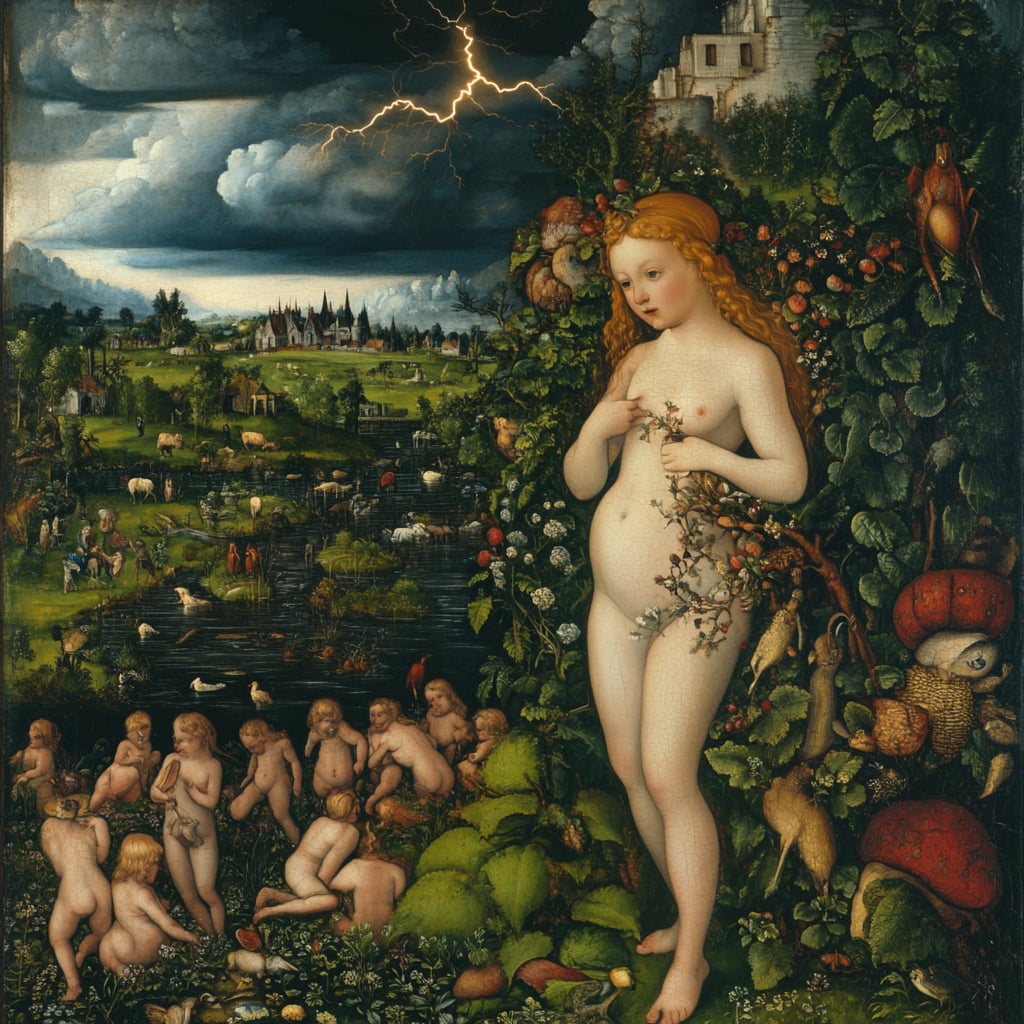
Uniformity of Nature, also known as the Principle of Uniformity, asserts that the patterns and processes we observe operating in the present have also operated in the past and will continue to operate in the future; it is a cornerstone assumption behind scientific inquiry, suggesting that the cosmos dances to consistent rhythms. But is this trust warranted, or merely a reassuring fiction we tell ourselves to make sense of an unpredictable reality?
The seeds of this idea can be traced back to the ancient Greek philosophers, though not formalized as a principle. Thinkers like Anaximander (c. 610-546 BCE) posited natural explanations for phenomena, hinting at underlying consistencies. However, it was during the Scientific Revolution and the Enlightenment that the concept truly crystallized. Figures like James Hutton, in his Theory of the Earth (1788), championed uniformitarianism in geology, arguing that slow, gradual processes shaped the Earth's surface over vast stretches of time, challenging catastrophic explanations then in vogue. Earlier still, the medieval polymath Robert Grosseteste championed the idea that studying the natural world, and using both reason and observation, could lead to understanding. His writings and teachings provided key influences to later figures like Roger Bacon and others. The concept of Uniformity of Nature is one of the "great ideas" of humanity's great conversation.
Over time, the concept evolved, facing challenges and refinements. While Hutton's uniformitarianism initially met resistance, it gradually gained acceptance, influencing Charles Darwin's theory of evolution. Darwin applied similar reasoning, suggesting that gradual evolutionary changes, observable today, could account for the diversity of life over eons. Yet, the discovery of impact events and mass extinctions demonstrated that catastrophic events, while infrequent, also play a role in shaping our world, thereby tempering the strict uniformitarian view. The principle doesn't deny the possibility of unique occurrences but insists that even these follow consistent natural laws. Has our understanding reached its zenith, or are there further paradigm shifts waiting to redefine our understanding?
Today, the Uniformity of Nature remains a foundational tenet of science across diverse fields. It enables us to interpret the fossil record, predict climate change, and explore the distant reaches of the universe. However, the concept still provokes philosophical inquiry. Is it a justifiable assumption or an article of faith? Can we truly extrapolate from our limited observations to the vastness of space and time? The enduring mystique of Uniformity of Nature lies in its delicate balance: a necessary tool for understanding the world, but one that demands constant scrutiny and a willingness to revise our perceptions as the universe continues to reveal its secrets.