Vanguard party - Philosophical Concept | Alexandria
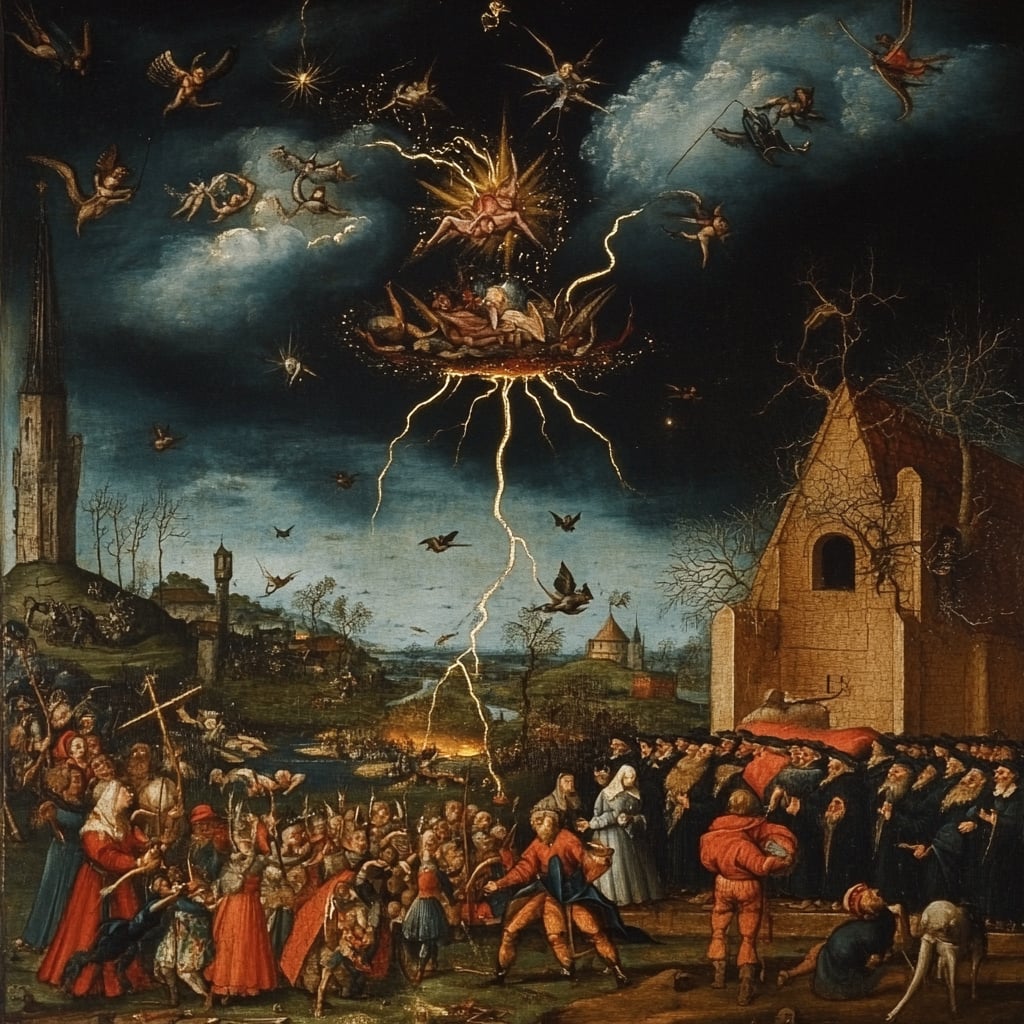
Vanguard Party: A concept shrouded in both aspiration and controversy, the vanguard party represents an organizational strategy whereby a highly disciplined and ideologically cohesive group aims to lead the broader working class towards socialist revolution. Often viewed as the engine of societal transformation, the idea is easily entangled with accusations of elitism and authoritarianism, challenging us to consider whether truly democratic revolution can be engineered from above.
The intellectual seeds of the vanguard party can be traced to Vladimir Lenin's 1902 pamphlet, What Is To Be Done?. In this work, Lenin, grappling with the conditions of Tsarist Russia, argued that socialist consciousness would not arise spontaneously among the working class but needed to be introduced by a dedicated cadre of professional revolutionaries. This idea was not entirely novel; similar concepts of committed leadership existed in earlier revolutionary movements. Yet, Lenin's articulation, rooted in the specific political and social climate of early 20th century Russia, became the blueprint for a new type of political organization. The context of state repression and underground activism significantly shaped the understanding of how a revolutionary movement could succeed.
Throughout the 20th century, the Leninist model of the vanguard party spread across the globe, influencing communist movements from Vietnam to Cuba. Mao Zedong further adapted and developed the concept, emphasizing the importance of the peasantry in revolutionary struggle. However, the practical implementation of the vanguard party was not without its challenges. The rise of Stalinism in the Soviet Union, with its attendant purges and centralized control, cast a long shadow on the ideal. Debates raged over whether the vanguard party inevitably leads to authoritarianism or if it can be reconciled with democratic principles. The legacy includes both inspiring tales of liberation struggles and sobering accounts of political repression.
The concept of the vanguard party continues to resonate today, albeit often in modified forms. Contemporary discussions on social justice, climate activism, and digital organizing often grapple with questions of leadership, strategy, and the role of committed individuals within broader movements. Whether through explicitly Leninist organizations or more loosely structured activist groups, the tension between centralized leadership and grassroots participation remain. As we examine the history and evolution of the vanguard party, we are compelled to ask: Can a truly democratic revolution be consciously led, or does the very act of leadership undermine the ideals it seeks to achieve?