नरसिंह (Narasimha) - Philosophical Concept | Alexandria
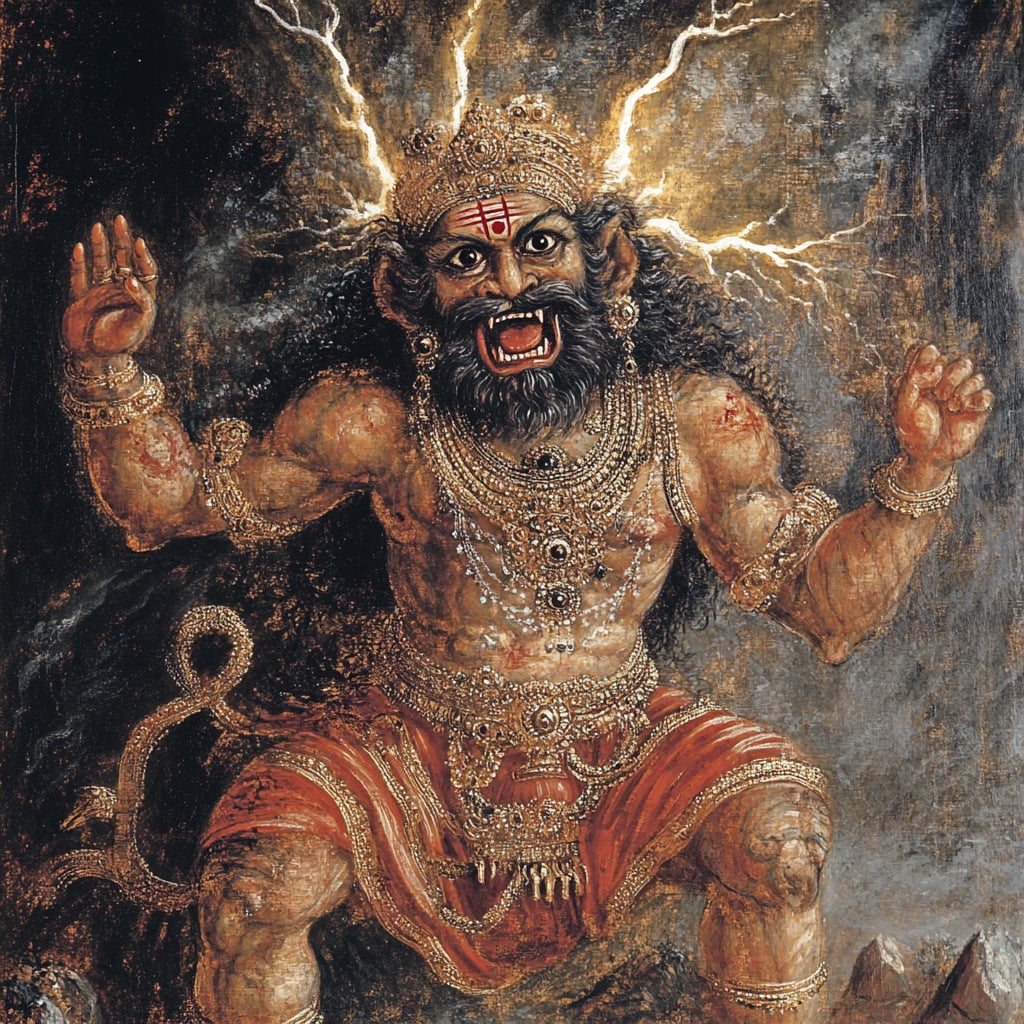
Narasimha, a figure of formidable power and divine paradox within Hindu mythology, is the fourth avatar of Vishnu, embodying a being neither wholly human nor beast. He is the destroyer of evil, yet also a protector of devotees, challenging the very boundaries of definition. Also known by names such as Narahari or Mrigendra, Narasimha transcends simple categorization, often misunderstood as merely a monstrous figure rather than a complex symbol of cosmic justice.
The earliest explicit references to Narasimha appear in the later portions of the Mahabharata (c. 400 BCE – 400 CE), and gain prominence in the Puranas, particularly the Bhagavata Purana (c. 800-1000 CE). This period saw significant shifts in devotional practices, a time when elaborate rituals and philosophical debates intertwined with burgeoning theistic movements. It was an era punctuated by social and religious reforms, and the rise of the Gupta empire, setting a landscape rich for the propagation and acceptance of such a potent deity.
The narrative surrounding Narasimha’s emergence—to protect his devotee Prahlada from the tyranny of his demon king father, Hiranyakashipu—has undergone varied interpretations, evolving from straightforward vanquishing of evil to profound philosophical allegories concerning the nature of reality, devotion, and liberation. The Sri Vaishnava tradition, spearheaded by figures like Ramanujacharya, significantly emphasized Narasimha as a prime deity worthy of devotion. Intriguingly, regional variations in Narasimha worship have resulted in distinct iconographic representations and associated rituals, blurring the line between pan-Indian and localized traditions. This raises the question: does the story of Narasimha reflect cultural assimilation or the localized expression of a universal truth?
Narasimha’s legacy persists powerfully. He remains a central figure in religious practice and continues to inspire art, literature, and philosophical discourse. Contemporary interpretations often emphasize Narasimha's role as a symbol of resilience against oppression, resonating with modern struggles for justice and human rights. But beyond this, his liminal state—neither man nor beast, appearing at twilight—continues to challenge our understanding of what it means to be divine. Is Narasimha merely a mythological figure, or does he represent a facet of the universe beyond our current comprehension, lurking in the spaces between defined realities?