Phercydes of Syros - Icon Profile | Alexandria
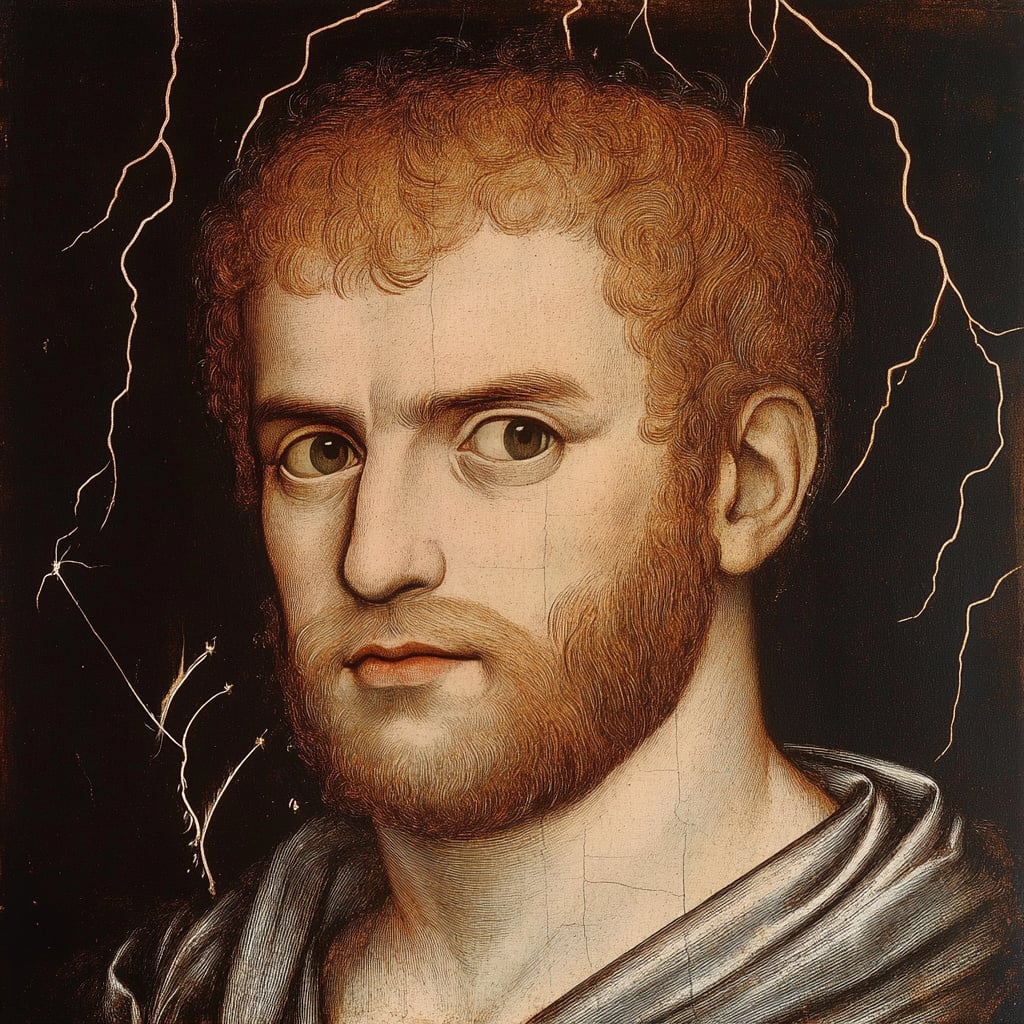
Pherecydes of Syros (c. 580-520 BCE), a seminal pre-Socratic thinker and mythographer, stands as one of the earliest known Greek prose writers and a pivotal figure in the transition from mythological to philosophical thought. Often overshadowed by his more famous contemporaries, Pherecydes emerges as a fascinating bridge between ancient mysticism and rational inquiry, earning him the distinction of being called both a theologian and a proto-philosopher by ancient sources.
First mentioned in writings by Diogenes Laërtius, Pherecydes allegedly authored the enigmatic work "Heptamychos" (Seven Recesses) or "Pentemychos" (Five Recesses), though only fragments survive today. Writing in the tumultuous sixth century BCE, when Greek civilization was experiencing profound cultural and intellectual transformations, he developed a unique cosmogonical narrative that merged traditional mythology with novel metaphysical concepts. His work represents one of the earliest attempts to explain the universe's origin through a combination of rational speculation and mythological symbolism.
Pherecydes' cosmology introduced the revolutionary concept of three eternal principles: Zas (Zeus), Chronos (Time), and Chthonie (Earth), departing from the conventional Hesiodic tradition. His most intriguing contribution was the image of Chronos creating the elements of the world from his own seed, and the cosmic wedding of Zas and Chthonie – metaphors that would influence later philosophical and religious thought. Tradition holds that he was the teacher of Pythagoras, though this connection remains debated among scholars, adding another layer of mystery to his historical significance.
The legacy of Pherecydes continues to intrigue modern scholars, particularly in discussions about the origins of philosophical prose and the evolution of Greek religious thought. His unique synthesis of rational and mythological elements prefigured later developments in both philosophy and theology. Contemporary research increasingly recognizes his role in establishing the foundations for systematic philosophical inquiry, while his innovative cosmological narratives continue to offer insights into the complex intellectual landscape of ancient Greece. The enduring question of whether Pherecydes should be classified as the last theologian or the first philosopher underscores the fascinating ambiguity of his position at the dawn of Western philosophical thought.