De Corpore - Classic Text | Alexandria
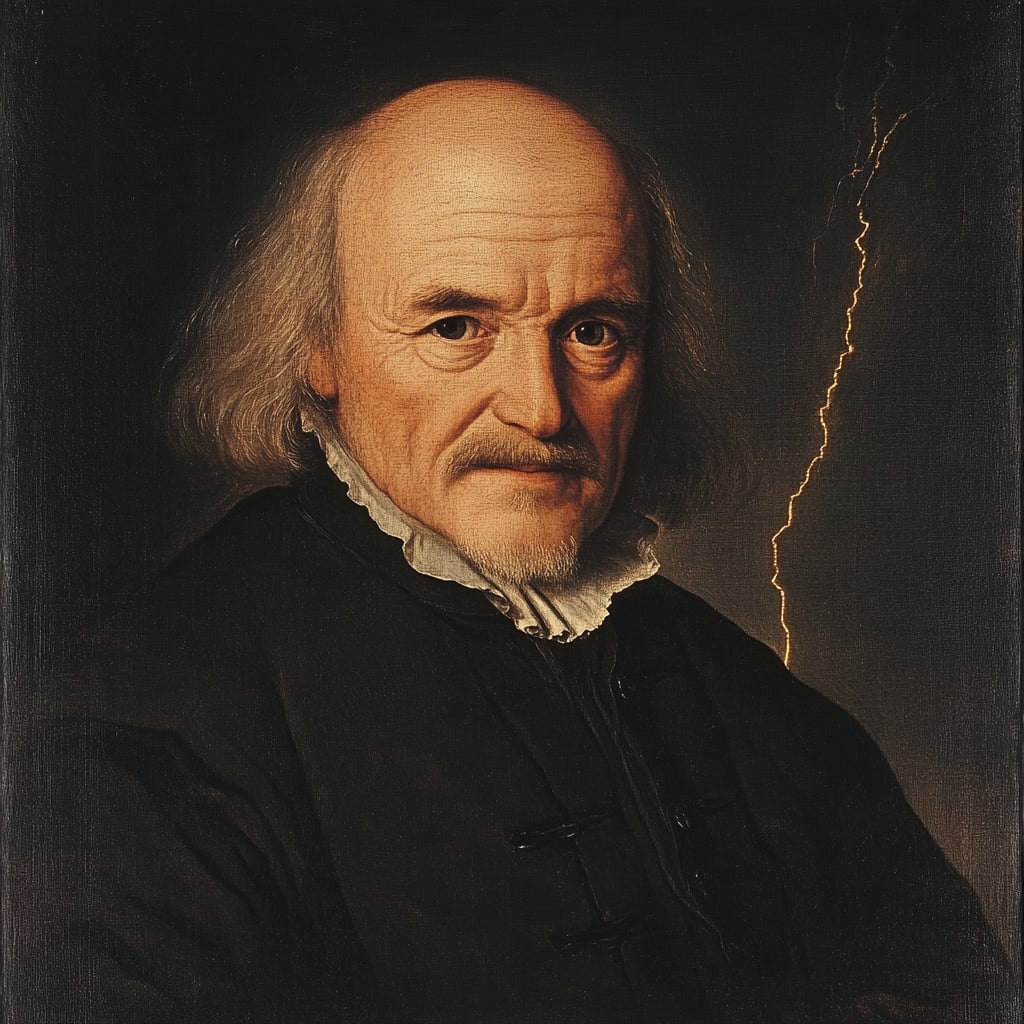
De Corpore (Concerning Body), published in 1655, stands as Thomas Hobbes's groundbreaking treatise on natural philosophy and represents the first part of his ambitious philosophical trilogy, Elements of Philosophy. This seminal Latin work, later translated into English, establishes the foundational principles of Hobbes's materialistic worldview and scientific method, marking a decisive break from Aristotelian scholasticism that dominated European universities of the time.
The work emerged during a period of profound intellectual transformation in 17th-century England, amid the turmoil of the English Civil War and the dawn of the scientific revolution. Hobbes began composing De Corpore while in exile in Paris, where he engaged with leading scientific minds including Mersenne and Gassendi, and was influenced by the mechanical philosophy of Galileo. The treatise's publication coincided with a time when traditional authorities in both politics and natural philosophy were being radically questioned.
De Corpore is structured in four parts: Logic, First Philosophy, Proportions and Motions, and Physics. Through these sections, Hobbes advances his revolutionary materialist philosophy, arguing that all phenomena—including human thought and sensation—can be explained through matter in motion. His geometric method, inspired by Euclid, attempts to build all knowledge from basic definitions, marking one of the first systematic attempts to apply mathematical reasoning to philosophy. The work's controversial reception, particularly its challenge to established Aristotelian doctrines, sparked intense debates in academic circles and contributed to Hobbes's reputation as an intellectual provocateur.
The legacy of De Corpore continues to influence modern discussions in philosophy of science, materialism, and methodological approaches to knowledge. Its mechanistic worldview prefigured many developments in physics and cognitive science, while its methodological innovations continue to inspire debates about the relationship between mathematics, science, and philosophy. Contemporary scholars still grapple with Hobbes's radical proposition that all reality can be reduced to matter in motion, making De Corpore a fertile ground for ongoing philosophical investigation into the nature of mind, matter, and scientific understanding.