Philosophy of Right - Classic Text | Alexandria
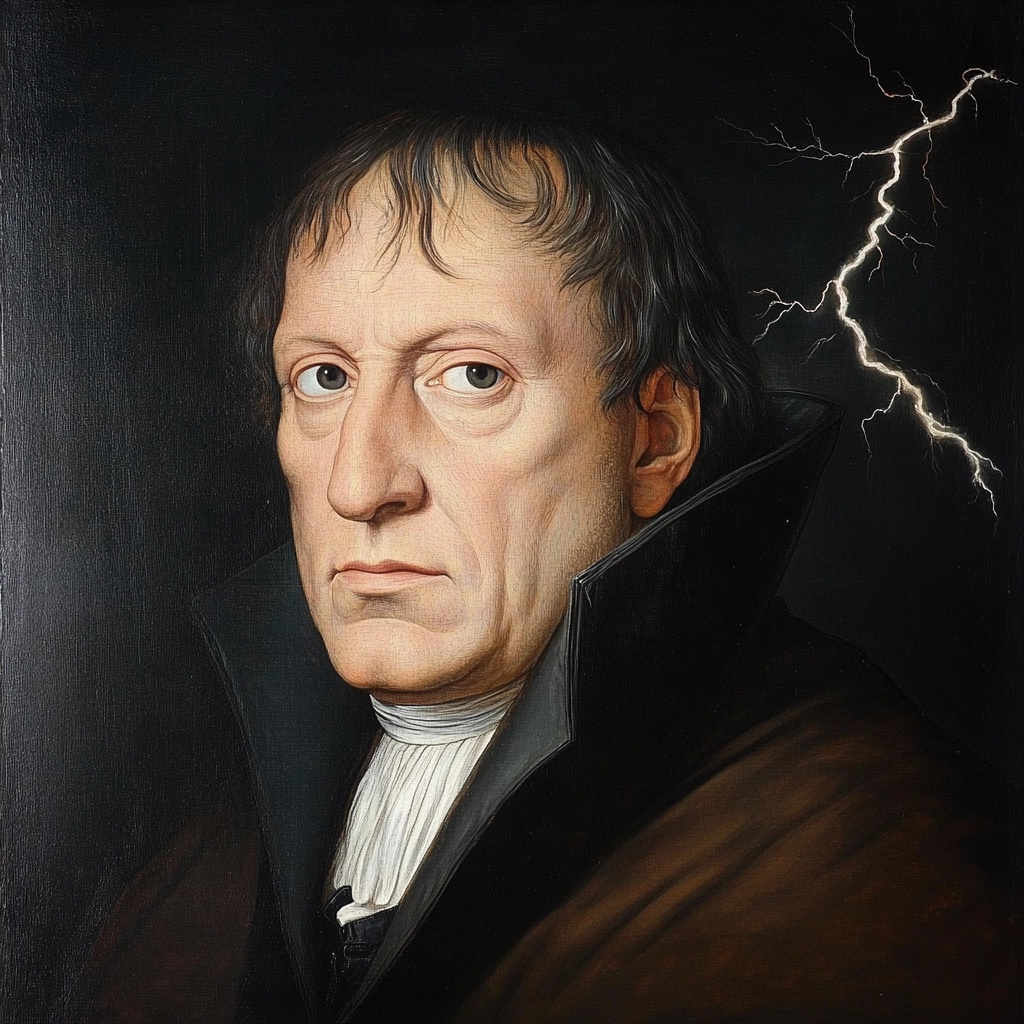
Philosophy of Right, also known as Elements of the Philosophy of Right, is not merely a treatise on law and governance; it is Georg Wilhelm Friedrich Hegel's ambitious attempt to reconcile individual freedom with the rational structure of the state. Published in 1820, the Philosophy of Right is often misconstrued as a conservative justification of the Prussian state. This obscures a far more nuanced exploration of ethics, morality, and social institutions, challenging us to reconsider the relationship between the individual and the collective will.
Hegel began lecturing on the philosophy of right as early as 1817-1818 while at the University of Heidelberg, offering an early glimpse into his evolving political thought. The book itself emerged during a period of significant social and political upheaval in Europe following the Napoleonic Wars. These lectures occurred at a time of nascent nationalism, burgeoning industrialization, and reactionary politics following the Congress of Vienna in 1815. This political climate shaped both its arguments and its immediate reception, setting the stage for future interpretations.
Over time, the Philosophy of Right has been interpreted by various schools of thought, ranging from right-wing Hegelians who emphasized its support for the state to left-wing Hegelians, like Karl Marx, who critiqued its idealism for failing to address material inequalities. Intriguingly, the book faced censorship upon its publication, a testament to the subversive potential that authorities perceived within its dense prose. One can also consider the influence of Johann Wolfgang von Goethe and his conception of Bildung, or self-cultivation, on Hegel’s view of individual ethical development within the context of society.
Today, the Philosophy of Right continues to challenge readers with its complex synthesis of individual liberty and institutional authority. Its enduring legacy lies in its articulation of ethical life within the modern state, prompting ongoing debates about justice, freedom, and the conditions for a truly rational society. Does true freedom emerge through the state, or does the state itself become the ultimate impediment to it? This question, deeply rooted in Hegel’s work, remains as pertinent today as it was two centuries ago.