The Shû King (Classic of History) - Classic Text | Alexandria
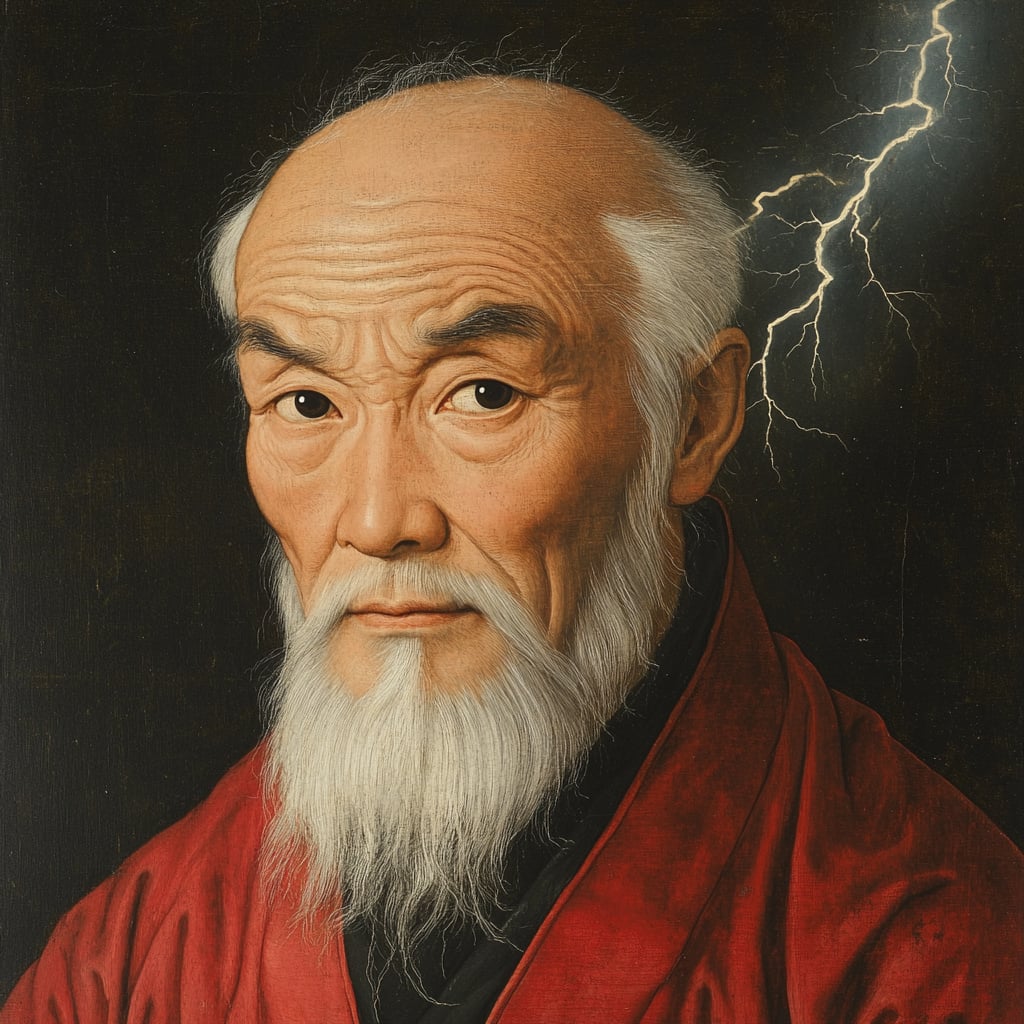
The Shû King (Shujing 書經), also known as the Classic of History or Book of Documents, stands as one of the Five Classics of ancient Chinese literature, representing a foundational text that purportedly preserves the speeches, declarations, and historical accounts of China's earliest rulers and their ministers. This remarkable compilation spans from the legendary Yao-Shun period (circa 2300 BCE) through the Western Zhou dynasty (1046-771 BCE), though its actual compilation likely occurred during the Spring and Autumn period (771-476 BCE).
First mentioned explicitly during the Han Dynasty (206 BCE-220 CE), the Shû King's authenticity became a subject of intense scholarly debate following the infamous "Burning of the Books" ordered by Emperor Qin Shi Huang in 213 BCE. The text emerged in two distinct versions: the "New Text" discovered during the Han period and the "Old Text" allegedly found hidden in the walls of Confucius's former residence. This discovery sparked centuries of philosophical and historical discourse about the document's authenticity and interpretation.
The work's evolution reflects the complex interplay between historical documentation and political legitimacy in ancient China. Comprising 58 chapters divided into four main sections, the Shû King presents itself as a mirror of wise governance, featuring dialogues between rulers and ministers that outline principles of ethical leadership, astronomical observations, and administrative procedures. Scholar Sima Qian's inclusion of references to the Shû King in his Records of the Grand Historian (Shiji) further cemented its historical significance, though modern scholarship has revealed layers of later additions and modifications.
Today, the Shû King continues to intrigue scholars and cultural historians, offering invaluable insights into ancient Chinese political thought and historiography. Its influence extends beyond academic circles, informing contemporary discussions about leadership, ethical governance, and cultural inheritance. The text's complex transmission history, coupled with its blend of historical documentation and moral instruction, raises compelling questions about the nature of historical truth and the role of classical texts in shaping national identity. Recent archaeological discoveries continue to shed new light on this enigmatic work, suggesting that the full story of the Shû King has yet to be told.